How to Score Better, Safer Airline Seats Without Paying Premium Fees
5 June 2026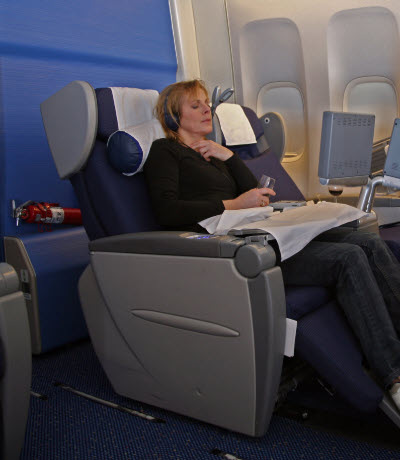
Despite war, exploding fuel prices, and viral outbreaks that might convince travelers to stay home this summer, it appears people are still booking. Travel advisors and industry officials are sharing that, at least so far, the summer travel season is looking surprisingly robust.
We often think of travel safety in terms of insurance policies and locked suitcases, but your physical and mental well-being starts before you even reach 30,000 feet. For many travelers, a cramped middle seat isn’t just a nuisance; it can be a legitimate health risk.
As we get older, our circulation needs a little more help, especially on long-haul flights. Sitting motionless in a tight space for hours increases the risk of joint stiffness and, more seriously, Deep Vein Thrombosis (DVT), which is a blood clot that can form in the legs during long periods of inactivity.
Finding a seat with extra legroom or securing a seat class upgrade isn’t just about the extra legroom or a better meal; it’s about having the space to stretch your calves, move your ankles, and ensure you arrive at your destination refreshed and ready to explore rather than spent and sore.

Step 1: Finding the Better Seat with Seats.aero
Seats.aero is a powerful search engine that scans millions of flights to find award seats – those elusive spots you can book with points or miles for much better comfort.
Here’s how to use it.
Let’s say you want to fly from Boston (BOS) to Milan (MXP) later this summer, and you’d like to see what airlines have award seats available.
Go to seats.aero, enter the airports and departure date, then click Search.
The results show you exactly which mileage program (like Delta, Virgin or United in this case) has premium or business class seats available.
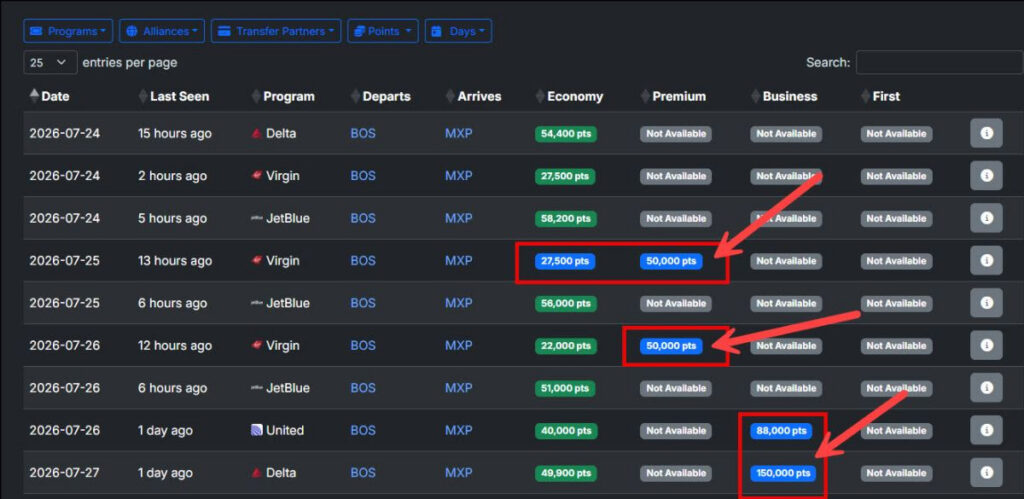
If you know you have credit card points, click the Explore menu option to see which airlines you can use those points on.
Click the Alerts button to create an alert that notifies you when seat availability is found.
The tool is technically free, but the window for looking ahead at seat availability is limited to just 60 days. It can be worth the cost ($9.99) of a month or two for the tool if you’re looking to book out an important trip or a few trips in the future.
Step 2: Protecting Your Wallet When Booking
In addition to using Google Flights to search for flights by the airlines you know have upgraded seats available (from using seats.aero), there’s an additional option to protect your wallet.
Don’t forget! Airlines are partnered up. So, if you see that United has upgraded seats available but Lufthansa has the best price according to Google Flights, you can buy that ticket and/or upgrade it with your United points.
Bonus! Booking on a European airline could save you hundreds!
Finally, before you buy, install the Points Path browser extension. When you search on Google Flights, it will automatically show a Price Match indicator that tells you whether it’s cheaper to pay with cash or use your miles.
For example, if you’re flying from Chicago to Phoenix for a family visit, the Points Path extension might show that while the cash price is low, using 10,000 miles is actually the better bet for your budget.
Step 3: Protecting Your Wallet (Even After You Book)
In the past, once I booked a ticket, I’d stop looking at the price. After all, I couldn’t do anything about it, right? Now, that’s changed too!
Once you’ve secured a seat, your next move is to ensure you’re getting the best price. Seat prices fluctuate daily, and unless you’re watching, you won’t know if the fare drops.
Here are two tools you can use to watch your flights for price drops: Junova and JetBack. After you book, you’ll forward your confirmation email to these tools, and they will monitor the flight prices.
- Junova: Best if you want a free start. They only charge you (20%) if they actually find you a lower price and secure a credit.
- JetBack: Best for frequent flyers. For $100 a year, they automatically file the claim for you every single time a price drops, without you lifting a finger.
You’ll receive an email notification that a credit (or sometimes a refund) has been issued to your airline account for future use.
If you use Junova or JetBack to snag a price drop, pay attention to how you are paid back. If the airline gives you a credit for future travel, your original insured trip cost remains the same. However, if you get a refund to your credit card, you have technically lowered your trip cost. If you have to file an insurance claim later, you can only claim the amount you actually spent out of pocket.
Pro tip: If you get a significant cash refund, call your insurance provider to update your policy—it might even lower your premium!

DamianTysdal
Damian Tysdal is the founder of CoverTrip, and is a licensed agent for travel insurance (MA 1883287). He believes travel insurance should be easier to understand, and started the first travel insurance blog in 2006.
Damian Tysdal is the founder of CoverTrip, and is a licensed agent for travel insurance (MA 1883287). He believes travel insurance should be easier to understand, and started the first travel insurance blog in 2006.