5 hotel safety rules you might be skipping
26 June 2026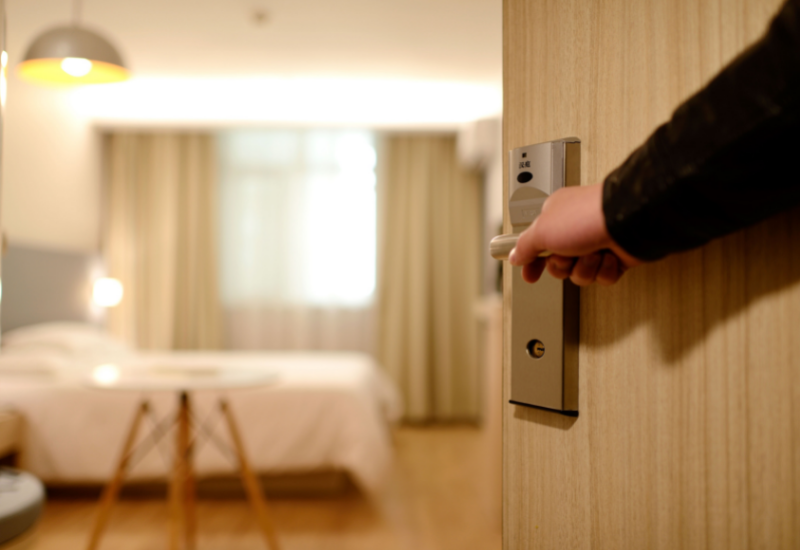
The summer vacation season is finally in full swing, and millions of travelers are packing their bags for well-deserved and long-wished-for getaways. There is nothing quite like the feeling of opening your hotel room door, dropping your luggage, kicking off your shoes, and officially starting off a trip. However, checking into your room does not mean you can completely drop your guard.
Whether you are staying at a luxury resort, a historic European boutique property, or a cozy domestic rental, your safety in those accommodations requires a deliberate mix of physical awareness and digital vigilance. Modern hotel security has evolved far beyond simply turning the deadbolt when you go to sleep. Today, staying safe means understanding everything from front-desk privacy protocols to the hidden cyber threats waiting on the resort Wi-Fi.
My goal is never to make you travel in fear, but rather to help you build simple, automatic habits that protect your peace of mind. By taking just five minutes to assess your surroundings and secure your space after check-in, you can ensure your sanctuary stays safe. Let’s look at the simple steps you can take to stay one step ahead of scams and security gaps during your summer travels.
Step 1: Check-In and Room Selection Strategy
When you arrive at your destination, your safety strategy should begin at the front desk, well before you ever touch the elevator buttons. First and foremost, try to arrive in daylight hours. It’s easier to miss potential red flags when you’re exhausted and it’s dark.
Next, the check-in process sets the tone for your entire stay, and a few quick observations can prevent a world of hassle later on. Of course, no well-trained hotel staff member will announce your room number out loud – that’s an immediate concern for your safety. If it happens, politely and firmly request a different room and ask that they skip announcing it to the world. You never know who is lingering near the reception desk, listening to who is staying in what room.
Because different trips bring different logistics, here is how to approach your room selection based on who is checking in:
- For Solo Travelers: Privacy is your ultimate shield. Stick firmly to the middle-floor rule (floors two through five) to avoid easy ground-floor access points. Also, consider requesting a room near the elevators but away from ice machines so you don’t have to walk too far down long hallways.
- For Couples: When traveling as a pair, it is easy to get distracted managing multiple bags or navigating a new language together at the counter. Dedicate one person to handling the check-in logistics while the other keeps an eye on the luggage and the surrounding lobby traffic. Make sure you both receive a key and verify the room number visually rather than out loud.
- For Family Travelers: If you are traveling with children or grandkids who are older than toddlers and require multiple rooms, request rooms side-by-side or directly across the hall rather than connecting rooms. Standard rooms give everyone their own private space to unwind after a long day of sightseeing, while still keeping the family close enough to coordinate plans easily. It also ensures that a late-night television or an early riser in one room won’t accidentally wake up the rest of the family next door. Just make sure the adults have keys to the kids’ rooms.
Step 2: 5-minute Safety Sweep
Your Attractive HeadingOnce you have your keys and head up to your floor, do not unpack just yet. Take five minutes to perform a quick physical sweep of the space to ensure everything is functioning exactly as it should.
Because the initial entry into a room looks a little different depending on your travel dynamics, here is how to handle that first walk through the door:
- For Couples: Teamwork makes this seamless. Have one partner stand in the hallway and block the heavy door open with a suitcase while the other walks inside to do a quick scan of the room’s main areas. Once the interior is verified, bring the bags inside and let the door shut completely.
- For Solo Travelers: Since you are managing the entry alone, place your heaviest bag in the doorway to keep it propped open while you step inside to turn on the lights and quickly check the main space and closets. Keeping that clear exit path open gives you total control and peace of mind until you are ready to close the door and lock down for the night.
- For Family Travelers: If you are traveling with adult children or grandkids, have the group hang back in the hallway for just a moment. One or two adults should step in first, prop the door open with a piece of luggage, and ensure the room is completely ready and unoccupied before bringing the rest of the family and their belongings inside.
Once everyone is safely inside, finish the physical check of the room together. Start by walking over to the landline phone and testing it to ensure you get a dial tone and can reach the front desk; in an emergency, you do not want to discover a broken cord. Next, check all the windows and balcony doors to verify that their latches close completely and lock securely. Finally, step back outside into the hallway and let the heavy main door swing shut on its own. Many travelers assume these doors automatically latch behind them, but worn hydraulic mechanisms can cause them to fail—left uncorrected, this invites an easy push-in intrusion.
When it comes to securing that main door from the inside, the hospitality industry has made great strides. Many modern hotels now feature built-in security mechanisms, such as heavy-duty swing bars or flip-out metal latches that physically prevent the door from being opened from the exterior, even if someone has a master electronic keycard. Always engage these devices immediately upon entering the room.
However, if you are traveling to historic boutique hotels, older properties, or unique vacation rentals, these modern flip latches might be entirely absent. In those specific scenarios, it is incredibly smart to pack a lightweight portable travel door lock or a heavy-duty rubber door wedge in your luggage. Jamming a sturdy wedge under the door frame before you go to bed provides an excellent, low-tech backup layer of protection, ensuring nobody can surprise you in the middle of the night.
Step 3: When You Leave for the Day
Even with a flawless check-in and entry strategy, the most common security gaps occur when you step out of your room to explore. Protecting your belongings while you are away requires a deliberate routine, especially when deciding what to keep in the room and how to secure it.
Before you head out for a day of sightseeing, take a moment to set the stage. Always leave the Do Not Disturb sign on the door handle, and keep a television or radio playing at a low volume inside. This simple trick creates the illusion that the room is currently occupied, which is a powerful deterrent for casual intruders.
Additionally, draw the main curtains so your electronics and luggage are not on display to anyone who might have an angle to peer in and see that the room is unoccupied.
When it comes to securing your most sensitive items, the in-room safe is a decent line of defense, but it requires a bit of strategy to use it well.
When it comes to securing your most sensitive items, the in-room safe and your luggage are your primary lines of defense, but both require a bit of modern strategy to use effectively:
The Reality of the In-Room Safe
By now, many travelers have heard that hotel safes often have default factory master override codes (like 0000 or 9999) that hotel staff may forget to change. Before trusting a safe with your passports and backup cash, perform a quick test. Perform an internet search on the type of safe you have to see if you can find a workaround code, then lock the safe empty and try entering the sequence or a common one like 0000 or 1234 to see if it overrides your lock.
If it opens, do not use it.
Instead, take your most critical documents to the front desk and ask to use the main hotel safety deposit box, which carries a much higher legal standard of liability. Be sure to take a picture of what you’re handing over in front of the clerk so they see that you know what they are locking up!
Pro tip: If the safe doesn’t work securely, help other travelers know this by leaving that in your review!
Securing Against the Ballpoint Pen Luggage Hack
It is a well-known trick among thieves that a standard zippered suitcase—even when locked—can be breached in seconds by forcing a ballpoint pen between the zipper teeth, sliding it open, and then resealing it by dragging the locked zipper pulls back over the gap.
To defeat this, avoid soft-sided luggage with exposed, single-row zippers. When buying new luggage, look for hard-sided suitcases with clasp-locking frames (zipperless) or bags equipped with puncture-resistant double zippers. If you are traveling with your current zippered bags, you can thwart casual thieves by using a small TSA lock to anchor the zipper pulls tightly to a fixed point on the bag.
Here’s your daily strategy by traveler type:
- For Solo Travelers: The in-room safe is non-negotiable for backup credit cards and extra cash if it passes your master-code test. For added safety during the day, always carry a copy of your travel insurance policy and emergency contact information in your daypack.
- For Couples: Before locking down the safe for the day, clear up any ambiguity about who has the code. Have one partner set the four-digit PIN while the other types it in to confirm it works before closing the door. It is also wise to split your primary backup funds: keep half of your spare cash and secondary credit cards in a verified safe, and let the other partner carry the remaining backup secure in a money belt or zippered inner jacket pocket.
- For Family Travelers: If you are traveling with a larger group, the in-room safe can quickly run out of real estate if everyone tries to cram their tablets, laptops, and passports into it. Prioritize the verified safe strictly for high-value essentials: passports, legal documents, and emergency cash. For larger electronics that will not fit, secure them inside zipperless or double-zippered hard-sided suitcases before heading out for the day, distributing the valuables evenly across individual bags.
Don’t Fall for this Common Front Desk Scam
Once your room is physically secured, there is one more hidden vulnerability you need to guard against: the in-room telephone. While we tend to think of hotel scams happening over sketchy public Wi-Fi, one of the most effective modern fraud schemes happens just as you’re relaxing in your room.
It typically happens late in the evening or early in the morning when you are tired and less likely to be on high alert. Here’s what it looks like:
- The landline phone in your room rings, and the person on the other end introduces themselves as the front desk clerk.
- They sound entirely professional and apologetic, explaining that there was a system glitch, an unreadable swipe, or a minor billing discrepancy with the credit card you provided at check-in.
- To avoid having your room keys deactivated and having you get dressed and travel down to the lobby, they ask you to quickly verify your card number and security code over the phone.
Because the request sounds official and urgent, it is easy to see how a tired traveler might comply just to resolve the issue quickly. Make sure everyone in your group knows not to give that information over the phone.
The Travel Insurance Reality Check
If you experience a theft from your hotel room or on the hotel property, it’s important to understand how a travel insurance claim will work.
Most comprehensive travel insurance plans include a benefit called Baggage and Personal Effects Protection. This specific coverage can help reimburse you for the net cash value of your belongings if they are lost, damaged, or stolen during your trip. However, many travelers are caught off guard by the strict limitations hidden in the policy’s fine print.
Insurance policies almost always impose a per-item limit (often capped between $250 and $500 per item) and a low, overarching maximum limit for high-value goods like jewelry, laptops, watches, and cameras. Furthermore, a travel insurance company will absolutely deny your claim if you cannot provide concrete proof of the loss.
This is why it’s important to:
- Leave valuables at home, but if you must take them, take a picture of the item so you can prove you had it with you if it’s stolen.
- Take pictures of what you’re leaving in your room safe. A quick video talking through the items and how much cash you’re leaving behind should do it.
Pro tip: Many homeowners don’t know they may have coverage for their electronics on their homeowner’s insurance policy. If your laptop is stolen on vacation, check with your homeowner insurance provider before you file a travel insurance claim. One may be better than the other.

DamianTysdal
Damian Tysdal is the founder of CoverTrip, and is a licensed agent for travel insurance (MA 1883287). He believes travel insurance should be easier to understand, and started the first travel insurance blog in 2006.
Damian Tysdal is the founder of CoverTrip, and is a licensed agent for travel insurance (MA 1883287). He believes travel insurance should be easier to understand, and started the first travel insurance blog in 2006.